ON CAVES
Longstanding fans of plans may recall the pseudtastic roots of this Philosopher-in-Residence’s desire to bring forward some mindfulness-inspired mastery on how to approach the curves in the road on the journey of modern life. I began in 2019 musing On Freedom and since then worldviews, politics and a whole raft of other philosophy-flavoured topics have inked my pen.
At school, I loved studying Classical Civilisation (ie ancient Greek political philosophy and works of prose/plays on how humans do human-ing, for those of you who aren’t familiar). It occurred to me recently that I haven’t yet featured one of the most famous metaphors on life in this blog. Thus, today I shall correct that!
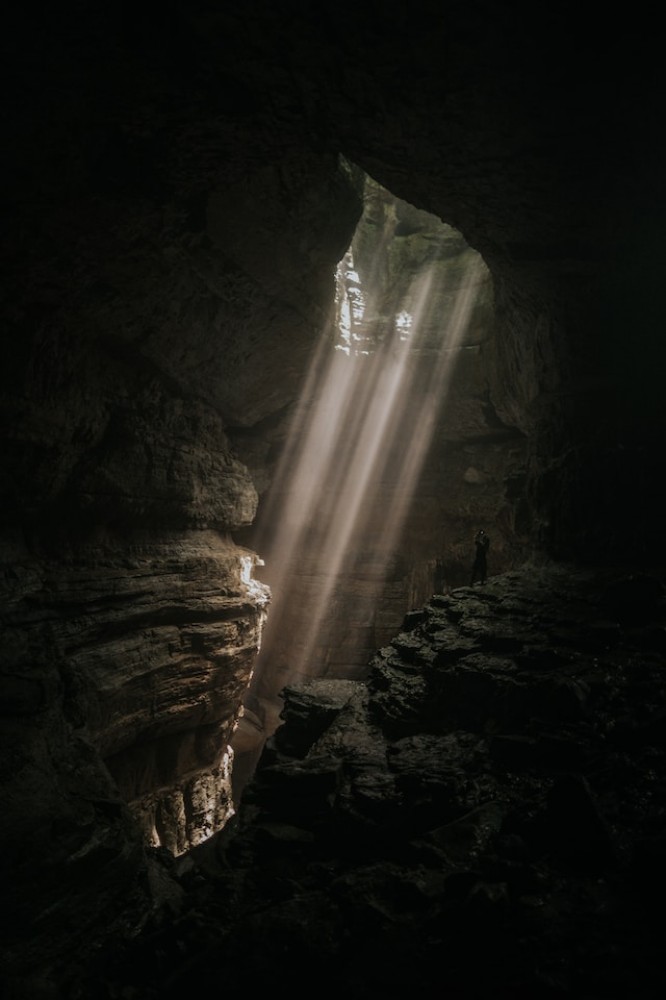
The Simile of the Cave, brought forward by slightly-more-famous-than-me-philosopher Plato, describes citizens existing their life in a cave. Their visual and contextual comprehension of reality is the shadows they can observe on the walls of the cave in the firelight. Plato used this metaphor as an early explanation of how change can be something assessed as having merit/being of overall benefit/progress by most or an aggregate of parameters, but nonetheless simultaneously something that engenders negativity and fear. Plato explained this by telling the story of how these citizens were freed from said cave and then able to move freely in the outer wider world and experience all it had to offer. Sounds much better than being stuck in a cave, at face value, doesn’t it?
When the first citizen was freed from the cave, however, their early days out in the great wide world were the source of much anguish. The bright sunlight burned their eyes and the abundance of opportunities confused them. Their own agency in doing what they wanted, when they wanted and a sense of personal responsibility, were not skills they had a sphere of reference to understand or welcome.
Over the passage of time, they adapted to realise this was a wider horizon and better quality of life. But when they returned to the cave to advocate this to their previous cavemates, their newly-developed eyes were now unable to see in the dim light of the cave and so you can imagine that when said liberated person showed up, proceeding to bump into and trip over things they couldn’t see, whilst going on about how great outside was, that the cave-dwellers, based on their confines of reality, would judge that Citizen A seemed just fine and just like them before they went out of the cave and now sounded very different and was stumbling around hurting themselves in their old environment.
An ancient allegory, but as well as being an interesting lens through which to view any personal or professional life changes, doesn’t it sound spookily similar to the way many people have found it super-difficult to re-adapt to the outside world post-covid-lockdowns?
I trust you enjoyed this very ancient throwback Thursday and I hope it helps you understand which bits of your cave are healthy and which are cornerstones of fear. Next fortnight, I’ll be writing On Ink, continuing ink and writing’s long association! Please get in touch with any particular aspects of this subject you’d like me to write about.
In the meantime,
Happy Planning
PS If you want some other free tips for your business life, check out the Working Well blog – out fortnightly on Wednesdays, courtesy of Make Me A Plan’s Productivity Expert, Penny Le Kelly. Browse the latest edition here:
https://www.makemeaplan.com/news/global-crisis-and-employee-wellbeing/